
- All
- Product Name
- Product Keyword
- Product Model
- Product Summary
- Product Description
- Multi Field Search
Please Choose Your Language


Views: 0 Author: Site Editor Publish Time: 2026-04-23 Origin: Site


Is your wastewater plant struggling with rising energy costs? The traditional "racetrack" oxidation ditch is reliable but often inefficient. Modern facilities are now upgrading to the oxidation ditch aeration disc for better performance. You will learn how these discs optimize nutrient removal and reduce operational expenses.
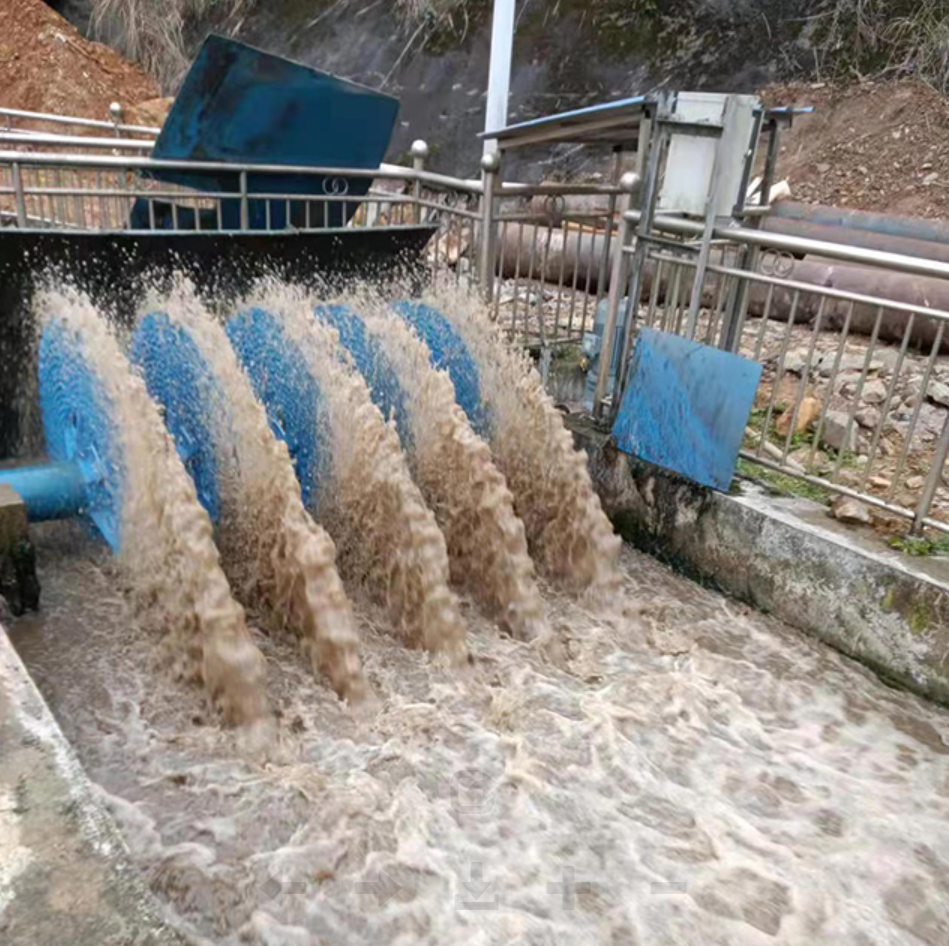
● Superior Oxygen Transfer Efficiency: The oxidation ditch aeration disc creates a larger air-water interface and finer bubbles, often exceeding the aeration efficiency of standard rotors by delivering up to 4.0 lb Oxygen/hp-hr.
● Energy Savings Through Decoupling: These systems allow operators to maintain critical channel velocities of 0.8–1.2 fps independently of oxygen demands, preventing energy waste during low-load periods.
● Enhanced Nutrient Removal: Precision control over dissolved oxygen levels enables simultaneous nitrification-denitrification (SND), helping plants achieve strict discharge permits of <10 mg/L Total Nitrogen.
● Increased Basin Depth Compatibility: Unlike traditional brush rotors, aeration discs perform effectively in deeper basins (up to 16 feet), which reduces the overall land footprint required for treatment.
● Reduced Maintenance Costs: The balanced rotational mass and use of corrosion-resistant materials, such as stainless steel, decrease bearing stress and extend equipment life to over 20 years.
● Operational Flexibility: Adjustable submergence depths (6–18 inches) and VFD integration allow for rapid response to diurnal load swings and seasonal changes without draining the ditch.
The oxidation ditch aeration disc changes how oxygen enters wastewater. Unlike cylindrical brush rotors that primarily churn the surface, disc geometry creates a massive air-water interface through high-speed rotation and specific surface texturing. This design optimizes the "Standard Oxygen Transfer Rate" (SOTR) by generating a controlled plume of fine bubbles that stay in contact with the mixed liquor longer than coarse spray.
Control is a primary advantage of this technology. Most discs feature adjustable submergence depth, typically ranging from 6 to 18 inches. This flexibility allows operators to fine-tune oxygen entrainment based on current organic loading. Deep submergence improves gas exchange stability during high-flow events, while shallow settings maximize atmospheric entrainment for standard operations.
Beyond transfer rates, these discs impact the "Alpha Factor," which describes how easily oxygen transfers into dirty water compared to clean water. Advanced disc designs handle complex surfactants and high-strength industrial waste better than traditional rotors. Furthermore, their mechanical engineering prevents cavitation, ensuring consistent oxygen delivery even at high rotational speeds.
Parameter | Traditional Brush Rotor | Oxidation Ditch Aeration Disc |
Typical SAE (lb Oxygen/hp-hr) | 2.0 – 3.0 | 2.5 – 4.0 |
Submergence Range | Limited | 6 – 18 inches |
Bubble Type | Coarse/Surface Spray | Fine/Controlled Plume |
DO Uniformity | Moderate Gradients | High Uniformity |
Note: Adjust disc submergence depths seasonally to maintain optimal dissolved oxygen levels while minimizing electrical demand during low-load winter months.
One of the biggest flaws in older oxidation ditches is the inability to separate aeration from mixing. If you need more oxygen, you must spin the rotor faster, which often moves the water too quickly and wastes energy. The oxidation ditch aeration disc excels at decoupling these functions. It maintains the critical 0.8 to 1.2 feet per second (fps) channel velocity required to keep solids in suspension without over-aerating the biomass.
By integrating Variable Frequency Drives (VFDs), the system responds to diurnal load swings—the natural ups and downs of wastewater flow throughout the day. Because the disc provides directional thrust more efficiently than a splashing brush, it reduces "energy leakage" into the atmosphere. This precision allows plants to operate at higher Mixed Liquor Suspended Solids (MLSS) concentrations, often between 3,000 and 5,000 mg/L, with lower overall horsepower.
Modern discharge permits frequently require Total Nitrogen (TN) levels below 10 mg/L and Total Phosphorus (TP) below 1 mg/L. Achieving these targets requires distinct aerobic and anoxic zones within the same loop. Oxidation ditch aeration disc placement allows engineers to create "Simultaneous Nitrification-Denitrification" (SND) zones.
As the mixed liquor travels away from the aerator, oxygen levels naturally drop. Because discs provide highly localized aeration, the "anoxic" part of the loop remains stable and effective for denitrification. This stability supports a long Sludge Retention Time (SRT) of 15 to 30 days, which is vital for the slow-growing nitrifying bacteria needed for clean effluent.
Note: Use real-time DO sensors both upstream and downstream of the aeration discs to automate VFD speeds for consistent nutrient removal performance.
Maintenance teams prefer disc systems because they address the common failure points of traditional rotors. Horizontal rotors often suffer from shaft corrosion and bearing fatigue due to their long, heavy spans. In contrast, the oxidation ditch aeration disc typically uses a vertical drive or a more balanced rotational mass, significantly reducing stress on bearings and gear reducers.
These systems utilize high-performance materials:
● Sealed Gear Reducers: Prevent moisture ingress and extend lubrication intervals.
● Modular Components: Allow for "in-process" replacement. Operators can often service individual discs or drive units without draining the entire 18–36 hour detention volume of the basin.
When deciding between technologies, footprint and depth are deciding factors. Brush rotors are generally limited to shallower ditches. However, the oxidation ditch aeration disc works effectively in basins ranging from 10 to 16 feet deep. Deeper basins minimize land requirements, which is critical for facilities where capital costs for land are prohibitive.
Feature | Brush Rotor Systems | Disc Aerator Systems |
Max Basin Depth | Typically <12 feet | Up to 16+ feet |
Maintenance Access | Often requires crane/dewatering | Often accessible from bridge |
Noise Level | High (surface splashing) | Low to Moderate |
Aerosol Production | Significant | Minimal |
Retrofit Potential | Good for existing shallow ditches | Excellent for deepening projects |
From a financial perspective, while discs may have a higher initial capital cost, their ROI is driven by a 20% to 30% reduction in annual energy consumption compared to non-VFD brush systems.
Note: When calculating ROI, include the cost of "downtime" prevented by the disc's modular design and ease of maintenance.
Proper performance starts with design coordination. Engineers use Computational Fluid Dynamics (CFD) to determine exactly where to place each oxidation ditch aeration disc. Poor placement leads to "short-circuiting," where water skips treatment, or "dead zones" where solids settle and rot.
The submittal process must include:
● Structural Review: Ensuring support beams can handle the torque and vibration of the drive units.
● Electrical Compatibility: Coordinating VFDs with the plant's SCADA system for automated DO control.
● Velocity Verification: During commissioning, the team must prove the discs maintain at least 0.5 fps throughout the channel to prevent grit accumulation.
Lead times for these specialized mechanicals are typically 16 to 24 weeks. Early coordination with manufacturers like Evoqua or Xylem is essential to keep project schedules on track.
Even the best equipment requires an observant operator. If you notice "dark sludge blankets" in the channel, it usually indicates a settling problem. The first response should be increasing disc speed to restore the 0.8–1.2 fps velocity.
Operators should also watch foam patterns:
● White, billowy foam: Often indicates a young sludge or high organic loading.
● Greasy, brown foam: May signal Nocardia or filamentous bulking, requiring a change in the aerobic/anoxic balance.
● Uneven splash patterns: A sign of debris buildup or a worn bearing that needs immediate attention to prevent shaft failure.
Note: Regularly check effluent weir elevations; setting them too low can reduce disc submergence and kill aeration efficiency.
The oxidation ditch aeration disc provides a high-efficiency solution for modern wastewater challenges. It optimizes oxygen transfer and reduces energy waste through decoupled mixing. By adopting this technology, plants achieve stricter nutrient limits while lowering operational costs. Changzhou Aoteng Environmental Engineering Co., Ltd. specializes in these durable systems to ensure long-term performance. Their tailored disc configurations match your specific basin geometry and loading requirements for maximum treatment efficiency.
A: An oxidation ditch aeration disc offers higher oxygen transfer efficiency and works in deeper basins , significantly reducing energy costs and land footprint.
A: It creates precise aerobic and anoxic zones , allowing for simultaneous nitrification-denitrification to meet strict nitrogen and phosphorus limits.
A: Yes, by using VFDs and adjusting submergence depths , the oxidation ditch aeration disc maintains mixing velocity while matching diurnal oxygen demands.
A: Operators should perform monthly lubrication and quarterly blade inspections. Its balanced design reduces bearing stress compared to traditional horizontal rotors.


